

- India First Modi s Foreign Policy

India First Modi s Foreign Policy
(The euphoria seen in the recent visit of Prime Minister Modi is not only novel but also points to the growing clout of India in the international forums. It is a thing of pride for every Indian to see American President rising from his seat, walks to Modi, to greet him)
His demand for autograph and the breaking of protocol by Papua New Guinea Prime Minister by reaching airport to receive Prime Minister Modi and bowing on his knees to greet him, talks a lot in itself The Australian Prime Minister addresses Modi as the boss' The jubilation in Indian diaspora, lecture to twenty thousand people in Sydney and the inauguration of little India in Australia along with the unveiling of Mahatma Gandhi statue in Hiroshima was something different for everyone. It is first time, when we see Indian diaspora regales Modi, Modi, Bharat Mata ki Jai in foreign lands The laudable approach of Government of India during Covid-19, along with its role in Russia Ukraine war, help to Sri Lanka (at the time of its crises)makes world leaders to see a new hope in India. All these gestures speak volumes about the foreign policy of the country and the emergence of Modi at the world scenario, as a person with solutions. He has been ranked as world number one leader by various agencies. His detractors can't neglect the human face in his foreign policy. This is quite evident from India's gesture towards Turkey at the time of its need. Turkey has an anti-India opinion on Kashmir but at the time of earthquake India was the first country to extend its help. The foreign policy of Modi is based on the great Indian Theme Vasudev Kutumbakam- the world is one family While there is appreciation by world leaders /Indian diaspora in different countries of the world for Modi and his foreign policy but back home some deem all these things as gimmickry or rhetoric. They blame PM for being on foreign visits, so it becomes imperative to analyse the recent visits of Modi and see for ourselves whether "India first" is visible in his foreign policy or not.
On May 21 2023 Prime Minister Narender Modi addressed highly industrialised G7 group of countries in Hiroshima (Japan). This group comprises France, Germany, Italy, United Kingdom, Japan, USA and Canada as members. Currently G7 has a collective economy of US$300 trillion which is about 58% to 60% of the Global wealth. The group has dominance of NATO members and the inclusion of Ukraine at the eleventh hour directly hinted about their intentions, as India had abstained from UN resolutions on Russia. It has also ramped up purchase of Russian energy providing a key lifeline to Vladimir Putin Government even as the west slapped sanctions on Russia. The NATO countries wanted India to criticise Russia and extend help to Ukraine but India skillfully kept distance from both as Indian interests were at stake.
India is a major purchaser of Russian weaponry and bears sustainable relations with Moscow, despite all these strong relations India wasted no time in conveying Russia that war is no solution. Modi on the sidelines of Shanghai Cooperation Organization summit held in Uzbekistan in September last year spoke to Putin of the need to move "on the path of peace" during a face to face with the Russian leader. India adopted a balanced strategy by extending humanitarian aid to Ukraine throughout the war. The Prime Minister Modi talked to Ukraine's President Zelenskyon the sidelines of G7 summit Japan, the first in- person meeting between the two leaders since the Russian Ukraine war broke. Modi did not condemn the Russian invasion but assured Zelensky that everything will be done to end the war. He held that the war is a big issue for the whole world and does not consider it to be just an issue of economy or politics. He termed it as humanitarian issue.
The NATO countries wanted to galvanise India's support for the Peace Plan of Ukraine and denounce Russia but India took an independent view. This balanced approach in Modi's foreign policy makes him not only the darling of the world but also gives an edge to Indian foreign policy over the personal agenda of China.
After G 20, Prime Minister Modi co-chaired 3rd Summit of Forum for India-Pacific Islands Cooperation (FIPIC) on 22 May 2023. India shifted its idea towards Pacific Island countries to contain China. Its help to these countries at the time of Covid is in itself a big thing which makes these island countries to see India as a saviour of their interests. China is trying its best to have its foothold in pacific islands, its pact with Solomon Island last year is an attempt in this direction.
Prime Minister Narendra Modi unveiled development agenda for the Pacific Island Nations at FIPIC summit held at Port Moresby, the capital of Papua New Guinea. This development agenda is part of the Act East Policy of India. The role of India for these countries was eloquently elaborated by Mr. Marape PM of Papua New Guinea in these words "We are victims of global power play and we want you (India) to be an advocate for us and sit in those meetings," he urged India to serve as the voice of the Global South in the G-7 and the G-20. And further held that "the small size of the island nations of the Pacific Ocean region should not overshadow the fact that the islands have large space in the ocean."
Mr. Modi assured the FIPIC members of India's support in the field of sustainable development, science and technology and space application His 12-point action plan announced at the third forum for FIPIC summit ranges from steps to boost health care, infrastructure in the island countries, to setting up regional IT centre and cyber security centres and providing desalination units to address the water scarcity. He announced that India is ready to share its capabilities with the region without any hesitation. He further held that "India respects your priority. It feels proud to be your development partner. Whether it's humanitarian assistance or your development, you can count India as a reliable partner. Our perspective is based on human values,"
PM Narendra Modi concluded his 3-nation visit with a bilateral meeting with Australian counterpart Anthony Albanese as both sides hinted at taking their ties to next level with closer defence and security ties to safeguard the Indo- Pacific region. Both have China as common enemy. The two Prime Ministers addressed a public meeting at Sydney Olympic Park exhibiting much confidence in each other. Both advocated for "free, open and prosperous" Indo-Pacific region. New Delhi and Canberra sought to push for conclusion of the talks for having Comprehensive Economic a Cooperation Agreement (CECA). The two sides discussed free trade. It may be mentioned here that Australia continues to maintain a robust trading relationship with China too even though it considers Beijing's growing belligerence in the region as a strategic challenge. India's growing trade relations will be a deterrent for China.
India and Australia share a 'Comprehensive Strategic Partnership' under which both sides have not only strengthened bilateral defence and security ties by setting up a 2+2 format talks between the foreign and defence ministries, but have also pushed their partnership under the Quad, of which the US and Japan are also members. Quad is felt as a big challenge by China.
20 PM Moi also raised the issue of vandalization of temples by Khalistan separatists, who have been holding referendums across Australia seeking support for a separate country for the Sikhs, with his Australian counterpart.
It may be held that the foreign policy adopted by Modi works on the principle of Serve all but succumb to none in the interest of the country. Its positive attitude for the problems of world makes it special for everyone and 'India First' in it makes Indians proud.
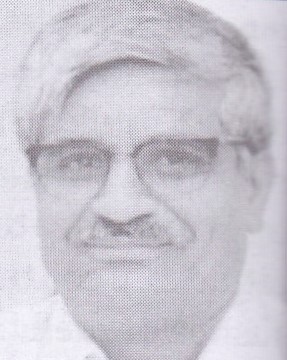
Professor (M.A.I.T), Guru Gobind Singh Indraprastha University, Delhi, Contact:
DISCLAIMER:
The views expressed in the Article above are M K Bhat personal views and kashmiribhatta.in is not in any way responsible for the opinions expressed in the above article. The article belongs to its respective owner or owners and this site does not claim any right over it. Copyright Disclaimer under section 107 of the Copyright Act of 1976, allowance is made for "fair use" for purposes such as criticism, comment, news reporting, teaching, scholarship, education, and research. Fair use is a use permitted by copyright statute that might otherwise be infringing."
Courtesy:- M K Bhat and Koshur Samachar 2023, July