


- Nothing has changed for the exiled Kashmiri Pandits for the last 26 years

Nothing has changed for the exiled Kashmiri Pandits for the last 26 years
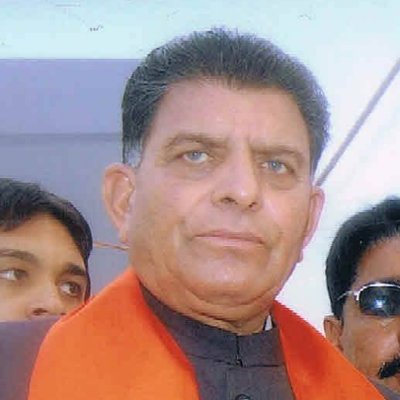
[Kundan Kashmin is a veteran Kashmin Pandit leader and President of the Kashmiri Pandit Conference, an organisation that demands formation of a separate Kashyapa Land for Kashmin indus. On the eve of the Holocaust Day on January 19, 2016 Koshur Samachar ascertained his views on the question of return and rehabilitation of the Kashmin Pandits which we are summing up for our readers here]
The Indian Government has failed to though they have been living in forced exile for the last twenty six years now. During this long period of time, the state or the Central government have not taken any substantial measures for the return of the exiled community to Kashmir from where they were hounded out in an outbreak of unprecedented terrorist violence. No Kashmiri Pandit can ever forget the horror of 19 January, 1990 when they were turned overnight from proud original inhabitants of the paradisiacal valley into refugees in their own country. I would like to urge brothers and sisters of my suffering community to come out on the roads in large numbers to observe it as a Black Day and give vent to their anger and disappointment over the apathetic attitude of both towards their problems for so long.
What took place exactly 26 years ago on January 19, 1990 was the biggest ever exodus of people since the partition of India and yet the government and the political class in the country hardly did anything to assuage the wounded feelings of the lakhs of minority Hindus of Kashmir who fled the Valley leaving behind their homes and hearths in the land of Kashyapa to save themselves from genocidal attacks at the hands of Islamic extremists. Going on a rampage on that night, wild hordes of frenzied militants came out to strike terror in the Valley leading to the displacement of a whole community of around four to five lakh hapless Pandits from their habitat. Commemorating January 19 as the Holocaust Day every year since then, the Pandits reiterate their longing to go back to their native soil from where they were uprooted ruthlessly for their only fault of being true Indian nationalists.
I shudder even today as I recount the horrific events that led to the mass exodus of the hapless KPs. It can be described as nothing else than ethnic cleansing or genocide, the murderous onslaughts starting in right from 1989 and even earlier. Ethnic cleansing is a term that has been characterised as an attempt to create ethnically homogeneous geographic areas through the expulsion or forcible displacement of persons belonging to particular ethnic groups. This is how the United Nations has defined the term. In Kashmir, the minority Kashmiri Pandits were targeted for trying to create such homogeneity.
The Azadi or the so-called freedom movement in Kashmir, as everybody knows, is essentially a creation of Pakistan. It is Pakistan which incited the local Kashmiri Muslims - though not all of them - to take the gun in their hands and rise in insurgency against India. The main purpose of Islamic terrorism in Kashmir was to turn the valley into a religiously homogeneous region - a region totally Islamic in character and spirit. Had the majority community of the Valley not fallen a prey to the Pakistani machinations and risen in insurgency, the exodus of the minority community from the Valley would not have taken place at all.
Ethnic cleansing, it must be said, sometimes. involves elimination of all cultural vestiges of the targeted group through destruction of its monuments, its houses of worship and its heritage sites and not just physical extermination. It may also involve displacement of an entire a population, forcing it to move from a particular area or region to far off places. With the rise of Islamic extremism in Kashmir, houses of the minority Hindus were burned and temples were destroyed. Notices were pasted on the walls of Kashmiri Pandit houses asking them to leave the Kashmir valley or to die. Genocide may be used as a means to carrying out ethnic cleansing Genocide is defined as deliberate and systematic destruction, in whole or in part of an ethnic, racial, religious, or national group.
So far as constitutional rights of a people are concerned, Article 2 of the 1948 United Nations Convention on the Prevention and Punishment of the Crime of Genocide defines genocide as any of the following acts committed with intent to destroy, in whole or in part a national, ethnical, racial or religious group, as such (1) Killing members of the group or the community; (2) Causing serious bodily or mental harm to members of the group or the community; (3) Deliberately inflicting on the group or community conditions of life, calculated to bring about its physical destruction in whole or in part; (4) Imposing measures intended to prevent births within the group or community (5) Forcibly transferring children of the group to another group or community. The National Human Rights Commission on June 11, 1999, in a ruling stated, "Against the stern definition of the Genocide Convention, the Commission is constrained to observe that while acts akin to genocide have occurred with respect to Kashmiri Pandits and that, indeed, in the minds and utterances of some of the militants a genocide-type design may exist, the crimes against the Kashmiri Pandits are near genocide and not genocide." The then United Nations Secretary General, Kofi Annan at the 60th Session of the Commission on Human Rights in Geneva on April 7, 2004 said, "Wherever civilians are deliberately targeted because they belong to a particular community, we are in the presence of potential, if not actual, genocide." While shocked over the remembrance of the past, I would like to tell the younger generation of the community that what happened in 1990s in Kashmir was ethnic cleansing of Kashmiri Pandits, bordering on genocide. Kashmiri Hindus were brutally killed by terrorists in 1989 and afterwards until they had no option but to leave the Valley. Prominent Kashmiri Pandits who were killed are Pandit Tika Lal Taploo, Justice Neel Kanth Ganjoo, Sarwanand Koul 'Premi' and his son, Advocate Prem Nath Bhat, Lassa Koul (Director, Doordarshan Kendra - Srinagar). Dr Raj Nath, Moti Lal Bhan, Satish Tickoo, Prof. Ganjoo, T.K Razdan, Sarla Bhat, Prana Ganjoo and others. Though the official figure of Kashmiri Pandit killings is given as 219, the Kashmiri Pandit Conference (KPC), a frontal organisation of KPs, and other organisations have assessed and counted that 399 Pandits were killed and the list of the killings is still incomplete.
The list was submitted to DGP J & K Human Rights Commission, New Delhi, Home Minister, Governor Jammu and & Kashmir, BJP General Secretary Ram Lal, Ram Madhav, MPs and MLAS by KPC for further action. A survey was done in 2008 and 2009 to find the exact number of Kashmiri Pandits killed. The survey revealed that 302 members of the community were killed in 1990 alone. Such selective killings of the minority Hindus of Kashmir surely amounts to genocide. Armed insurgency was aimed at secession of the state of Jammu and Kashmir from India and Pandits were seen as living symbols of Indian nationalism in Kashmir. They were seen as obstacles in the way of attaining the so-called Azaadi from India. The Valley was cleansed of Pandits because they had tilak on their foreheads. It would be worthwhile to mention here that some KPS had good neighbours also in Kashmir belonging to the majority community who advised them to leave as they had come to know that the Valley wasn't safe for the Pandits anymore.
What has changed for the exiled Kashmiris these 26 years? Have those responsible for making Kashmiri Pandits homeless been prosecuted? Have any of the killers of minority Hindus been punished for their barbaric acts? It is ironic that not a single judicial inquiry has been constituted to find out the facts about the killings and exodus of Kashmiri Pandits.
The fact is that the Government of India has failed Kashmiri Pandits, who are the aborigines of the Kashmir Valley and they are still living as refugees in their own country. The state the Central government has not taken any concrete measures till date for the return of Kashmiri Pandits to the Valley. If they had taken any, the return would not have perhaps happened. How long will it take the Government of India to wake from its deep slumber and address the issues concerning the displaced Kashmiri Pandits? This January 19, 2016, Kashmiri Hindus entered the 27th year of their exile. Remember, Lord Rama's exile was of 14 years only, but the exile of his followers from the Kashmir Valley has crossed 26, and is still continuing. has been 26 years and there are still no answers answers to questions about the exodus, the killings, the human rights violations, the injustice done to Kashmiri Pandits and possibility of their return to Kashmir Valley on their own terms. The Kashmiri Pandit Conference, of which I happen to be the head, asks the government not to test the patience of Kashmiri Pandits any longer. It should respect their sacrifices, bear in mind the fact that they are committed nationalists, and so it should accept their demand for a separate homeland, their own "Kashyap Bhoomi", where the writ of the Indian Constitution runs and Article 370 stands abrogated.
DISCLAIMER:
The views expressed in the Article above are Kundan Kashmir views and kashmiribhatta.in is not in any way responsible for the opinions expressed in the above article. The article belongs to its respective owner or owners and this site does not claim any right over it. Copyright Disclaimer under section 107 of the Copyright Act of 1976, allowance is made for "fair use" for purposes such as criticism, comment, news reporting, teaching, scholarship, education, and research. Fair use is a use permitted by copyright statute that might otherwise be infringing."
Courtesy: Kundan Kashmiri Koshur Samachar 2016, February